
Air Force seeks AI tool to help manage Minuteman III ICBM sustainment
The new AI tool could help cut down the cumbersome labor needed to sift through roughly 60 different data sources, according to the Air Force.
The new AI tool could help cut down the cumbersome labor needed to sift through roughly 60 different data sources, according to the Air Force.
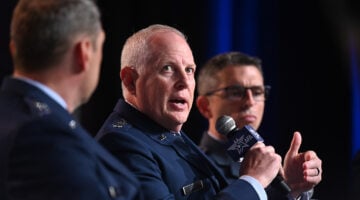
“We certainly have not lowered the bar, and we certainly have not taken on any risk by doing this,” Air Force Gen. Dale White told Breaking Defense.


Lithium-metal batteries are one way to break the weight and endurance limits of today’s unmanned systems.

The fresh approach is meant to streamline weapons procurement and cut through bureaucracy, though details like exactly what authorities new Portfolio Acquisition Executives will have are being worked out.

A look at some of the top stories that defined the air warfare beat this year.

The new date marks some progress for the beleaguered Air Force One program, whose challenges have cost Boeing billions of dollars.

Undersecretary of Defense for Acquisition and Sustainment Michael Duffey outlined key steps taken since an early November mandate to move out on acquisition reform.

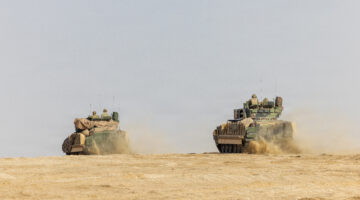
Army vehicles like Bradley need greater power at the sprocket for speed, braking, and manueverability.

Nuclear experts from three different think tanks argue that it's time to take the idea of mobile launchers for America's ICBMs seriously.

On day three of AFA, a senior Air Force official acknowledged the US didn't see Israel's strike in Qatar coming.


The Air Force’s Sentinel missile’s capabilities are being proven digitally to accelerate design and reduce costs.

Things that go into orbit led the news at day two of the AFA conference.

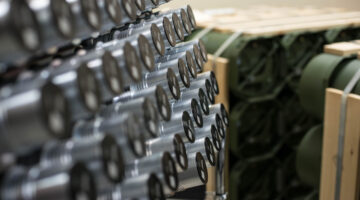
APKWS® laser‑guidance kit provides reliable precision‑guided munitions across missions and platforms, delivered quickly to meet evolving operational demands.

Air Force Program Executive Officer for ICBMs Brig. Gen. William Rogers said he has “every intention” of fully fielding the forthcoming Sentinel missile ahead of 2050.

“Today's GAO report confirms that we desperately need an independent review to hold Pentagon officials accountable for wasting and mismanaging billions of taxpayer dollars,” Sen. Elizabeth Warren told Breaking Defense.

The team talks about a couple recent scoops on the Navy's secretive drone wingman program and the transition to Sentinel ICBMs.

The service said that requirements to keep 400 nuclear missiles on alert will not be impacted by the shuttering of a silo located at F.E. Warren Air Force Base in Wyoming.